Smarter Budgets, Higher ROI: How AI Campaign Managers Eliminate 42% Ad Waste Automatically

What If Your Marketing Budget Could Manage Itself?
Most marketers didn’t sign up to become spreadsheet managers.
Yet today, up to 60% of a marketer’s time is spent tracking budgets, monitoring performance, reconciling billing, and fixing reporting gaps. That’s time lost to operations instead of strategy, creativity, and growth.
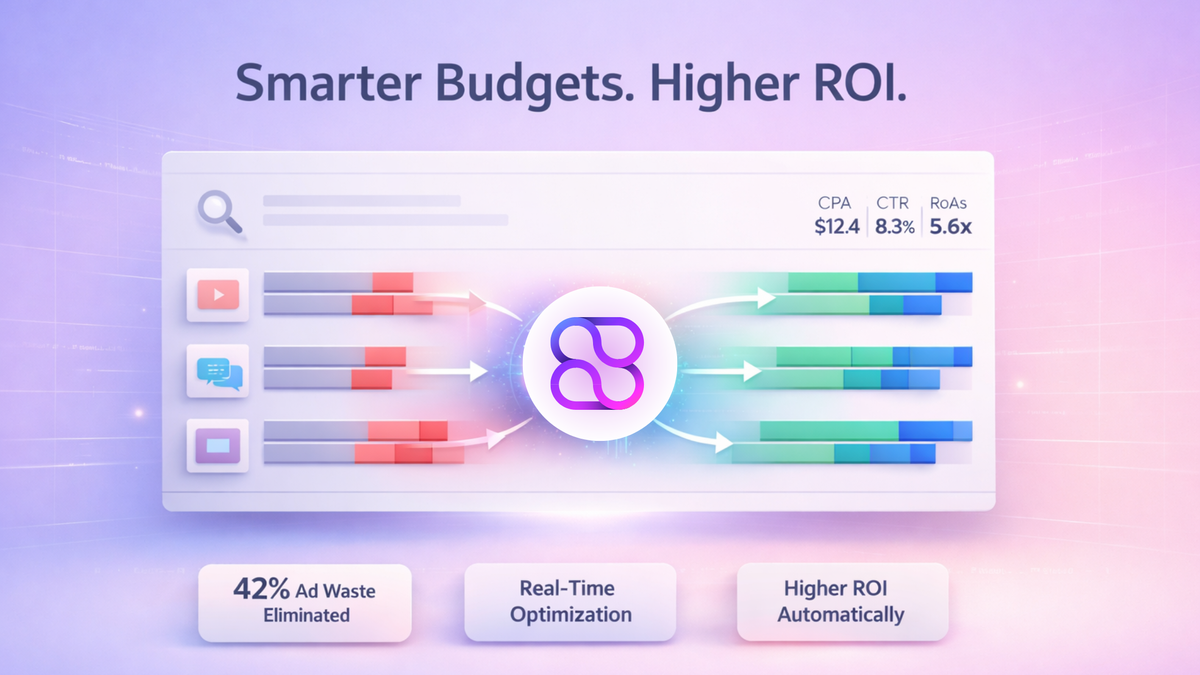
At the same time, research shows that 42% of marketing budgets are wasted on underperforming channels (Forrester, 2024).
This is exactly the problem AI Campaign Managers were built to solve.
The Real Problem with Modern Campaign Management
Across industries — B2B, SaaS, services, e-commerce, and enterprise — marketing teams face the same issues:
- Too many platforms, not enough clarity
- Budget decisions made too late
- Manual billing and reporting errors
- Optimization that happens after money is already spent
Traditional tools show you what happened.
They don’t fix it.
That’s where an AI Campaign Manager changes the equation.
How AI Campaign Managers Actually Work
An AI Campaign Manager doesn’t just track data — it acts on it.
Here’s how AI-driven campaign management replaces chaos with control:
1. Smart Budget Analysis Across Channels
AI continuously analyzes spend across platforms, campaigns, and audiences. It identifies which channels are delivering ROI — and which are quietly wasting budget.
2. Real-Time Budget Reallocation
Instead of waiting for weekly or monthly reviews, budgets auto-adjust in real time. Spend moves away from low-performing campaigns and toward high-impact ones instantly.
3. Automated Billing and Cost Visibility
AI generates billing insights automatically. Overspending is flagged before it becomes a problem — not after finance asks questions.
4. Actionable Insights, Not Raw Data
Dashboards don’t just show numbers. They explain what to do next — helping teams forecast better and scale faster.
This is marketing that manages itself, while humans focus on strategy.
The Results: What Businesses See After Switching to AI
Brands that adopt AI-powered campaign systems consistently report measurable improvements:
- 33% higher ROI from smarter budget allocation
- 40–70% improvement in marketing efficiency
- 50% faster reporting cycles
- Significant reduction in manual errors and rework
Top companies like HubSpot, Salesforce, and AdCreative.ai already leverage AI-driven campaign optimization. What was once enterprise-only technology is now accessible to growing teams as well.
From Chaos to Clarity: A Real-World Shift
Many teams start in the same place:
- Dozens of dashboards
- Inconsistent reports
- Endless manual budget tweaks
- No confidence in where money is really going
After implementing an AI Campaign Manager, the shift is immediate.
What Changes:
- 20% more efficient budgets as AI reallocates spend automatically
- Real-time billing insights with every cost tracked and explained
- Simplified workflows as manual reporting disappears
As one client put it:
“AI Campaign Manager didn’t just save time — it gave us back control.”
And control is what modern marketing teams need most.
Why AI Budgeting Beats Manual Optimization
Manual optimization depends on:
- Human availability
- Delayed data
- Incomplete visibility
AI optimization works differently:
- Always on
- Always learning
- Always adjusting
This is why AI for marketing campaigns is no longer optional — it’s becoming the baseline for competitive performance.
Beyond Ads: AI + Messaging = Full-Funnel Control
Campaign performance doesn’t end with clicks. Engagement and follow-up matter just as much.
That’s where WhatsApp automation plays a critical role.
Using AI-powered WhatsApp Drip Campaigns, businesses can:
- Nurture leads automatically
- Maintain consistent follow-ups
- Avoid spammy broadcast messages
- Improve engagement without manual effort
Learn how intelligent messaging works with WhatsApp Drip Campaign automation that stays compliant, contextual, and conversion-focused.
AI ensures messaging supports campaigns — not undermines them.
Traditional Campaign Management vs AI Campaign Management
| Area | Traditional Approach | AI Campaign Manager |
|---|---|---|
| Budget Decisions | Manual, delayed | Real-time, automated |
| Budget Waste | High (up to 42%) | Continuously minimized |
| Reporting | Manual, error-prone | Automated, accurate |
| Optimization Speed | Weekly or monthly | Continuous |
| Team Workload | Heavy operational load | Strategy-focused |
| ROI Growth | Incremental | 30–40%+ improvement |
The takeaway:
AI doesn’t replace marketers — it removes the busywork that holds them back.
What This Means for Marketing Leaders
If you’re a:
- Founder
- CMO
- Growth leader
- Agency owner
The question is no longer “Should we use AI?”
It’s “How much budget are we wasting without it?”
AI Campaign Managers give teams:
- Efficiency without burnout
- Transparency without spreadsheets
- Control without micromanagement
Final Thoughts: Smarter Marketing Wins
Great marketing has never been about working harder.
It’s about making better decisions — faster.
With AI Campaign Managers, marketing finally becomes:
- Predictive instead of reactive
- Automated instead of manual
- Strategic instead of operational
That’s the future of campaign management — and it’s already here.

Frequently Asked Questions
What percentage of marketing budgets are wasted on underperforming channels, and how does AI fix it?
Marketing budget waste refers to the percentage of ad spend lost on underperforming channels, which is around 42% according to Forrester 2024 research. AI fixes this by reallocating spend in real time.
How AI fixes it:
Detects low-performing campaigns instantly
Shifts budget to high-ROI channels
Prevents waste before it accumulates
How does an AI Campaign Manager reallocate budget in real time across marketing channels?
AI Campaign Manager budget reallocation is the process of using AI to shift ad spend across channels based on real-time performance data. It improves efficiency without manual effort.
How it works:
Monitors engagement and conversion signals
Identifies underperforming campaigns
Redirects budget to better-performing channels
According to 2025 marketing studies, AI improves budget efficiency by up to 20–33%.
How much time does an AI Campaign Manager save marketing teams compared to manual management?
AI Campaign Manager time savings refer to reducing manual marketing tasks by automating campaign monitoring, reporting, and optimization. It frees teams to focus on strategy.
What it saves:
Automates reporting and billing insights
Reduces manual tracking and errors
Speeds up decision-making processes
According to 2025 marketing data, teams save up to 50% time with AI tools.
Is AI campaign management only suitable for large enterprises or can small teams use it too?
AI campaign management suitability refers to using AI tools for both large enterprises and small teams to automate and optimize campaigns. It is effective for businesses of all sizes.
Who benefits:
Small teams and solopreneurs
Growing businesses and startups
Agencies managing multiple accounts
According to 2025 adoption trends, AI tools are widely used beyond enterprises.
What is the difference between traditional campaign management and AI campaign management in terms of ROI?
The difference between traditional and AI campaign management refers to manual, delayed optimization versus real-time automated optimization that improves ROI. AI delivers faster and more consistent results.
Key differences:
Manual vs automated decision-making
Delayed vs real-time optimization
Higher vs lower budget waste
According to 2025 performance data, AI improves ROI by 30–40% and efficiency significantly.